New Testament elders (literally older) were leaders of local congregations (Acts 11:29-30; 14:23; 15:2, 3, 6, 22; 16:4; 21:18; 1 Timothy 5:17-20). The word is used interchangeably with the word bishop (or overseer Acts 20:17, 28; Titus 1:5-7) clearly indicating both describe the same office.
Peter exhorts them as a fellow elder. He also was one who saw the suffering of Christ as he was crucified and looked forward to the glory that will belong to all Christians when they get to heaven. Peter was one who witnessed Christ’ s suffering and was to carry his testimony to all the world (1 Peter 5:1; Luke 24:46-48).
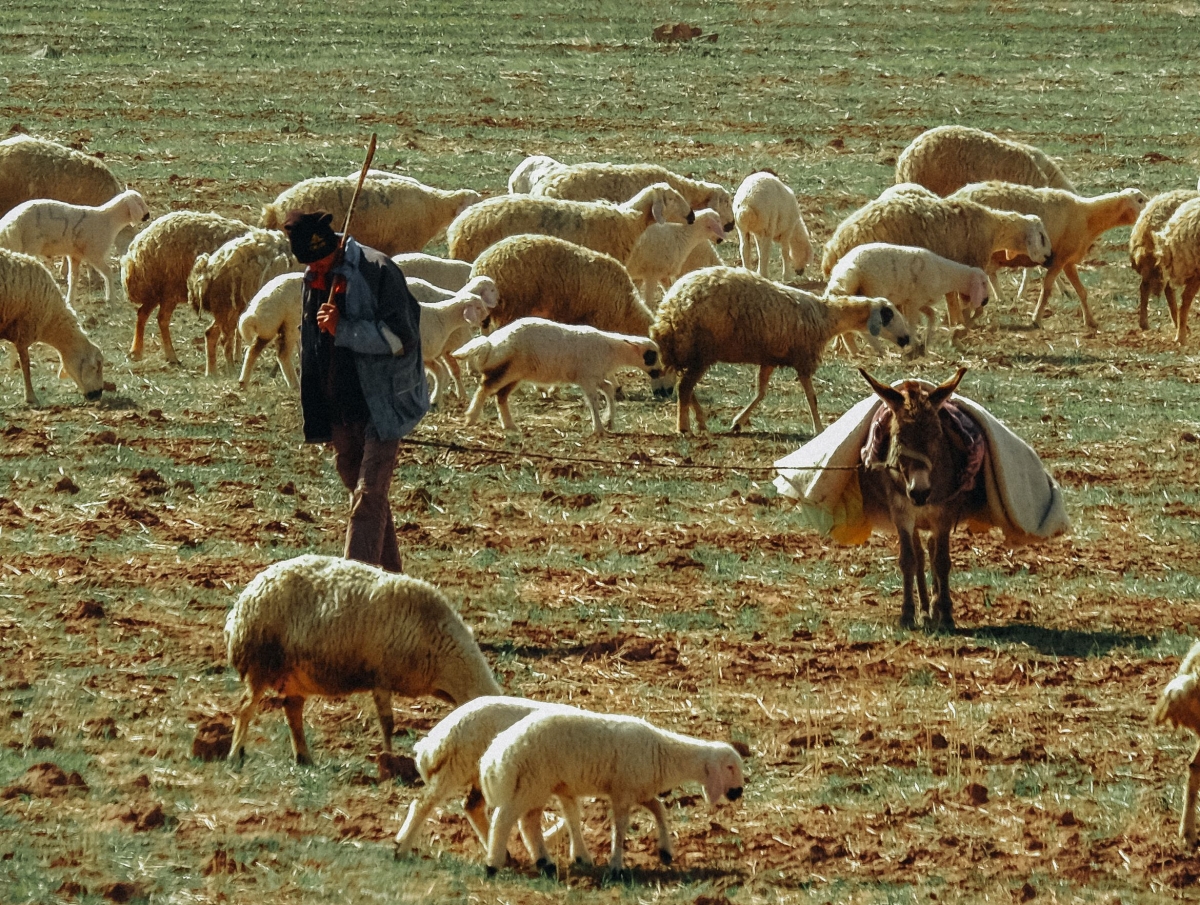
The apostle said elders have the very important task of shepherding, which includes the whole work of a shepherd, God’s flock (Acts 20:28). The shepherd rarely fed his flock, but he did pasture them. "Their duty was to guide them from place to place, to protect them from wild beast, and to keep them from straying”(J. W. McGarvey, A Treatise on the Eldership).
McGarvey went on to give some insight into the shepherds of that day, saying, "The Jewish shepherd was at once the ruler, the guide, the protector, and the companion of his flock." He continued about the shepherd, "He did not drive them to water and to pasturage; but he called his own sheep by name, so familiar was he with everyone of them, and he led them out, and went before them, and the sheep followed him, for they knew his voice. John 10:3,4."
Hebrews 13:7 talks about "those who rule over you." The word actually means lead, as in leading one to a conclusion, an idea also found in 1 Timothy 5:17. The word translated "rule" in that verse is the same one used to speak of the father’s position in relation to his family in 1 Timothy 3:4-5.
Elders oversee a flock that belongs to God. They are stewards over God’s possession. Their authority is limited to the flock among them, their own congregation (Titus 1:5). Christians should yield to God’s overseers as long as their actions do not contradict the will of God.
Obedience is especially important because the elders are responsible for each member’s soul (Hebrews 13:17). They will be made to rejoice if a soul is saved and grieve if it is lost. The members will thus not have to be forced, or constrained, to serve, but will willingly follow.
Neither should elders serve because of the personal gain that might arise from such service. This verse and 1 Timothy 5:17 indicate elders were paid to work in the first century church. Misuse of the position to obtain more money would be wrong. Instead, he should eagerly serve with his ultimate desire being to please God (1 Peter 5:2).
Peter warned elders not to become power mad and rule with a domineering attitude (Mark 10:42-45; 3 John 9-11). He encouraged them to lead lives that would be a clear pattern to follow (1 Corinthians 11:1). They should ever be mindful of the fact that they work under Jesus Christ who is the Chief Shepherd (John 10:14; Hebrews 13:20).
Elders should not serve with thoughts of earthly, temporary rewards that will perish. They should know that faithful service will bring an imperishable reward when Jesus comes the second time (1 Peter 5:3-4).
The apostle’s words to fellow elders makes us appreciate that role. We should pray God will bless them as the watch out for our eternal well being.
- Shepherds over the flock of God - 2026-06-11
- Glorifying God in suffering - 2026-06-04
- Serving to glorify God - 2026-05-14