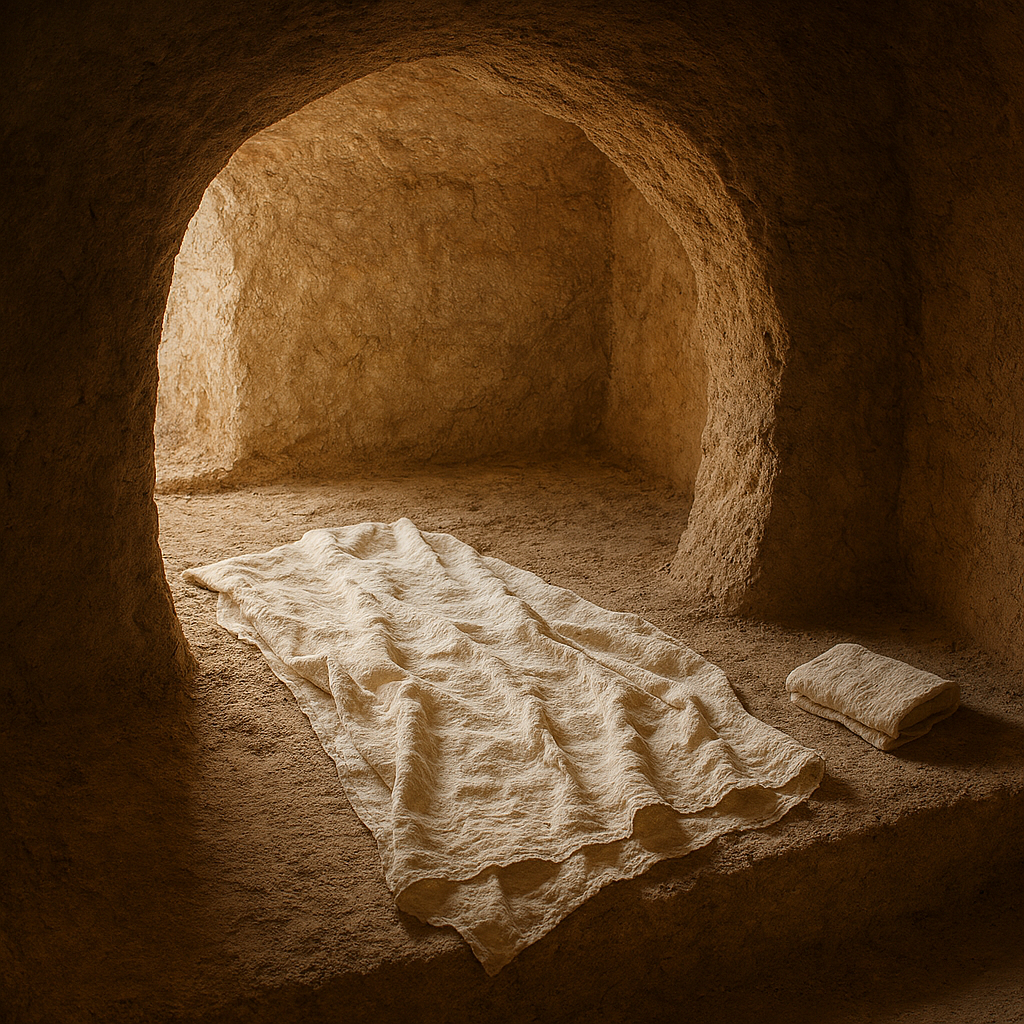
“Now very early on the first day of the week, while it was still dark, Mary Magdalene came to the tomb and saw that the stone had been moved away from the entrance. So she went running to Simon Peter and the other disciple whom Jesus loved and told them, ‘They have taken the Lord from the tomb, and we don’t know where they have put him!’” (John 20:1-2 NET)
Although John only mentions Mary from Magdala, the other gospels let us know that she wasn’t on her own: Mary, the mother of James, and Salome were with her (Mark 16:1). Why were they up so early?
When you think about the conditions of the first century, we realise most of what we would use to get us up early did not exist – there were no alarm clocks, street lights, or anything we would rely on to get us up. They couldn’t have been awakened by the light from the sun because when they arrived at the tomb it was still dark. I get the impression that they either didn’t sleep well or they hadn’t gone to sleep. The Sabbath had ended at the end of Saturday; they would not have been able to prepare the spices they needed to finish the preparation of the body during Shabbat. Perhaps they began working on these Saturday evening and worked into the night so they would be ready.
The first day of the week following Passover was a special time as it was the beginning of the Festival of Unleavened Bread. Special ceremonies and offerings would take place that day including the offering of the first-fruits of the spring crops (see Leviticus 23). Perhaps they went to the tomb early that morning because of the activities that would take place throughout that day.
Some thoughts come to mind about the timing of these events. Jesus was crucified as the Passover lambs were killed – and he is our Passover lamb (1 Corinthians 5:7). He came back from the dead the same day that the first-fruits offering was made – and he is the first-fruits of those who have died (1 Corinthians 15:20). The idea behind giving the first-fruits was more than it just being the first of the crop – yes, it was the first of the crop, but it was offered to God because there would be more. It was the promise of more to come. Think about Jesus as the first-fruits of those who died: he was the first to come back from the dead and not die again, but that brings the promise that we, too, will be raised. The timing of Jesus’ death and resurrection was not coincidental!
“Then Peter and the other disciple set out to go to the tomb. The two were running together, but the other disciple ran faster than Peter and reached the tomb first. He bent down and saw the strips of linen cloth lying there, but he did not go in. Then Simon Peter, who had been following him, arrived and went right into the tomb. He saw the strips of linen cloth lying there, and the face cloth, which had been around Jesus’ head, not lying with the strips of linen cloth but rolled up in a place by itself. Then the other disciple, who had reached the tomb first, came in, and he saw and believed. (For they did not yet understand the scripture that Jesus must rise from the dead.)” (John 20:3-9)
The wording John used to record what they saw indicates that they the grave clothes still in position but the body was missing – as if the body had gone through the grave clothes. Despite Jesus having told the disciples over and over that he would rise from the dead, they still did not expect it. Seeing the tomb caused them to begin to believe, even though they did not yet understand what had happened.
These eye-witness reports should help us to believe – Jesus did not stay dead but came back to life! This gives us the hope of eternal life.
Image created by Apple’s ImagePlayground by Jon Galloway.
Readings for next week: John 18-21; 1 John 1-2
- The tomb was empty! - 2026-05-30
- Blinded by their own interpretation - 2026-05-15
- Believing in Jesus the Messiah - 2026-05-08