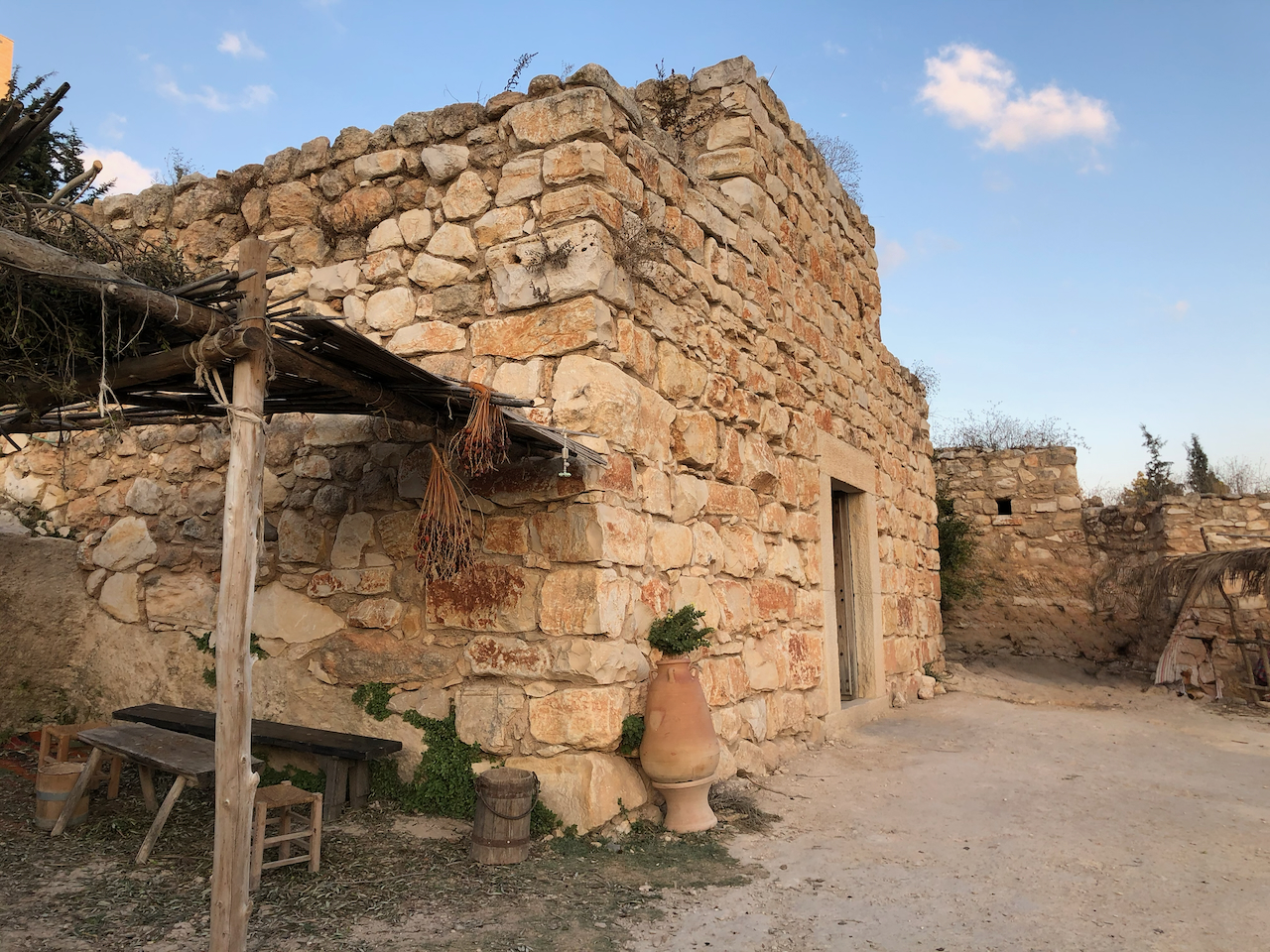
“Jesus left there and went to his home town, accompanied by his disciples. When the Sabbath came, he began to teach in the synagogue, and many who heard him were amazed. ‘Where did this man get these things?’ they asked. ‘What’s this wisdom that has been given him? What are these remarkable miracles he is performing? Isn’t this the carpenter? Isn’t this Mary’s son and the brother of James, Joseph, Judas and Simon? Aren’t his sisters here with us?’ And they took offence at him.” (Mark 6:1-3 NIV)
Nazareth at the time of Jesus would have been a village with everyone knowing each other – most place the population at this time between 100 and 500 people. They would have known Jesus from the time he was a child and as he grow up to become a carpenter and builder. It is possible that he helped many in the village when they needed something built or repaired. They knew Jesus as someone who worked with his hands.
But he had left the village two years earlier and was becoming known in the region as a religious teacher and healer. When he came back to visit his hometown, bringing with him his students, that had to have raised an eyebrow or two. On the Sabbath he was at the synagogue where readings from the scriptures and teaching took place each week. It would seem that he was invited to read and teach that day – Mark recorded that he taught that Sabbath in the synagogue.
When the people heard him they were amazed. They knew Jesus as someone who made things and here he was teaching from God’s word. They wanted to know how he was able to expound this way on the Scriptures – who had taught him? And what about the remarkable things he was doing, most likely healing people – how was he able to do this? After all, they knew him. He was Mary’s son and they knew his brothers and sisters. What he was doing offended them because they thought he was not qualified to either teach or heal.
Have we had something similar happen to us? Perhaps we were known as not being serious, yet we made something of our lives, studied, and became a teacher. Sometimes those who knew us in the past struggle with what we have become. How do we react when this happens to us? How did Jesus react?
“Jesus said to them, ‘A prophet is not without honour except in his own town, among his relatives and in his own home.’ He could not do any miracles there, except lay his hands on a few people who were ill and heal them. He was amazed at their lack of faith. Then Jesus went around teaching from village to village.” (Mark 6:4-6)
Jesus realised that the hardest people to convince are those who know you from the past. While others accepted him as a teacher and healer, those in his hometown struggled to accept this change. As a result he couldn’t do many miraculous signs there, most likely because people would not bring those who needed healing to him – after all, if they didn’t believe in him why would they? But there were a few who were ill that he was able to help. What amazed Jesus was their lack of faith in spite of the evidence that was in front of them: they heard his teaching, they saw what he was doing, yet they still rejected him.
What about us? Although we cannot go and hear or see Jesus in person, we have the testimony of witnesses who did hear him and observe what he did. These are found in the writings of the apostles and prophets in our New Testament scriptures. There is more than enough evidence to know that what is recorded is reliable. They were recorded so that we might believe.
During this new year, spend time examining what we find in God’s word and allow it to help bring us to faith in Jesus and to help that faith to grow.
Photo of Synagogue in Nazareth Village, Israel, by Jon Galloway.
Readings for next week: Mark 5-9
- Declaring God’s message when it isn’t popular - 2026-03-06
- Is it all a show? - 2026-02-27
- The accuracy of the Bible’s prophecies - 2026-02-20