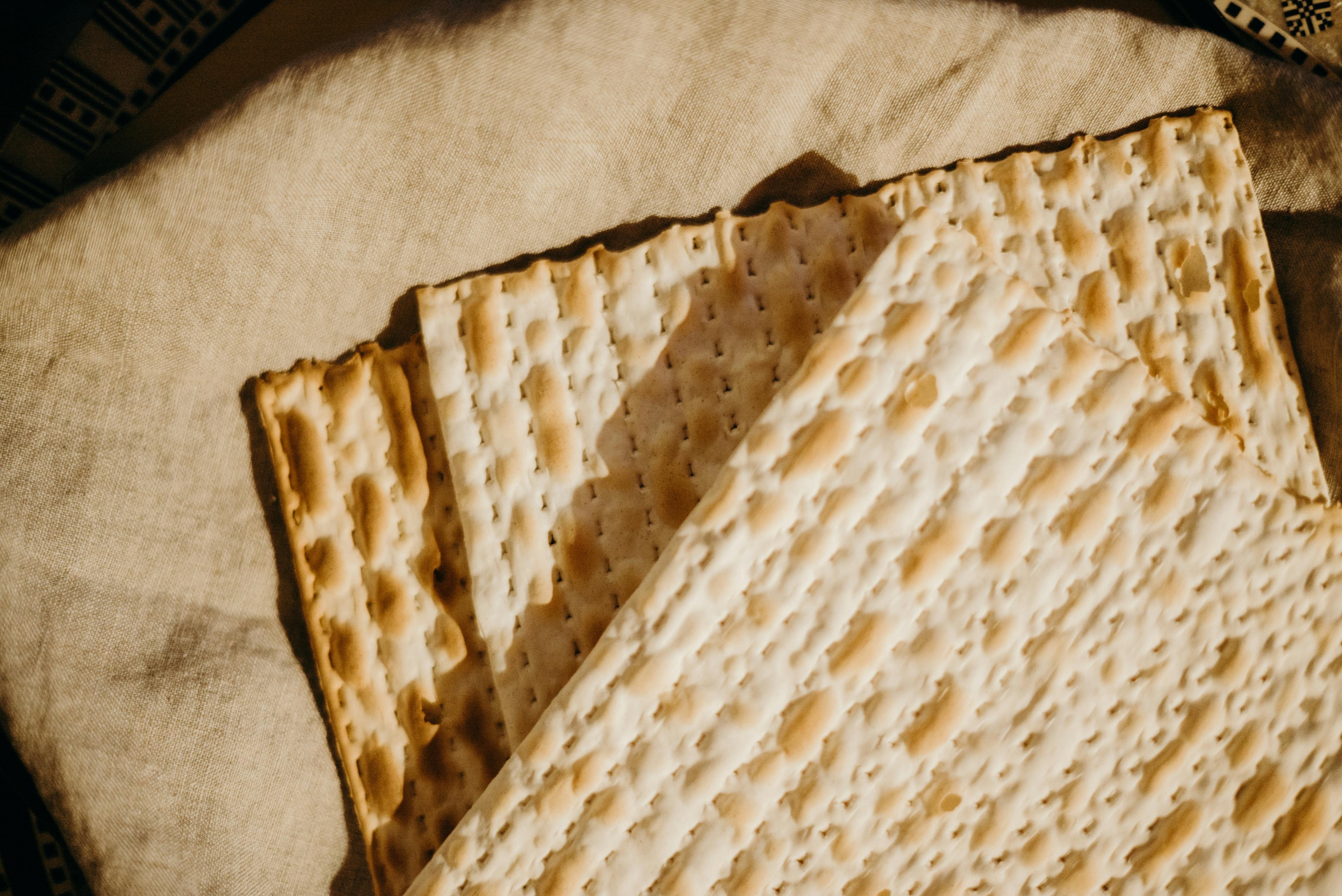
“Your boasting is not good. Don’t you know that a little yeast leavens the whole batch of dough? Get rid of the old yeast, so that you may be a new unleavened batch—as you really are. For Christ, our Passover lamb, has been sacrificed. Therefore let us keep the Festival, not with the old bread leavened with malice and wickedness, but with the unleavened bread of sincerity and truth.” (1 Corinthians 5:6-8 NIV)
The image of Jesus as a lamb is found several times throughout the apostles’ writings. When John pointed his disciples to Jesus he said, “Look, the Lamb of God, who takes away the sin of the world!” (John 1:29). Peter said that we were redeemed “with the precious blood of Christ, a lamb without blemish or defect” (1 Peter 1:19). In John’s vision he saw a lamb:
“Then I saw a Lamb, looking as if it had been slain, standing at the centre of the throne, encircled by the four living creatures and the elders” (Revelation 5:6).
This all looks back to what Isaiah wrote about the coming Messiah: “He was oppressed and afflicted, yet he did not open his mouth; he was led like a lamb to the slaughter, and as a sheep before its shearers is silent, so he did not open his mouth” (Isaiah 53:7).
Paul used this image, depicting Jesus as “our Passover lamb” who has been sacrificed. He connected this with keeping the Festival, referring to the Festival of Unleavened Bread that followed the Passover. Before Passover the Jews had go through their homes and remove all yeast (or rising agents). When they kept the Festival it was to be with bread that had no leaven in it, to symbolise the sudden exodus of the Israelites from Egyptian slavery.
So, what is the Festival that we are to keep? The emphasis is that leavening, rising agents in the bread, represents “malice and wickedness”. In the Scriptures, leaven shows the influence that something has: “Don’t you know that a little yeast leavens the whole batch of dough?” – it doesn’t take much yeast in comparison to the amount of flour to influence all the dough so that it rises. The yeast that we need to get rid of is sin in our lives. It would seem that Paul is using this figure to talk about our lives as Christians – when we become Christians our sins are washed away.
“What shall we say, then? Shall we go on sinning, so that grace may increase? By no means! We are those who have died to sin; how can we live in it any longer? Or don’t you know that all of us who were baptised into Christ Jesus were baptised into his death? We were therefore buried with him through baptism into death in order that, just as Christ was raised from the dead through the glory of the Father, we too may live a new life.” (Romans 6:1-4)
This new life is one where we have gotten rid of the “old yeast” – we’ve put our sinful ways behind us. We now had a new life to live “with the unleavened bread of sincerity and truth”. Jesus has cleansed us of our sins. We must now put sin behind us as we live a new life following our new Master, the Messiah.
The problem Paul was addressing amongst the Christians in Corinth was that someone was living in open sin – and the rest weren’t doing anything about it! In fact, they were proud of it and boasting about it! Can you imagine it – boasting about someone living in sin? Paul was reminding them that if they were to follow the Messiah they needed to “get rid of the old yeast”: they couldn’t continue to tolerate Christians living in flagrant, open sin amongst them. Such was unthinkable considering the price that had been paid for them.
May we examine our own lives so that we “may be a new unleavened batch”, living lives free from “malice and wickedness”.
Image from pexels.com created by cottonbro studios. Free for use.
Readings for next week: 1 Corinthians 1-9
- The need to fight for what we believe - 2026-06-05
- The tomb was empty! - 2026-05-30
- Blinded by their own interpretation - 2026-05-15