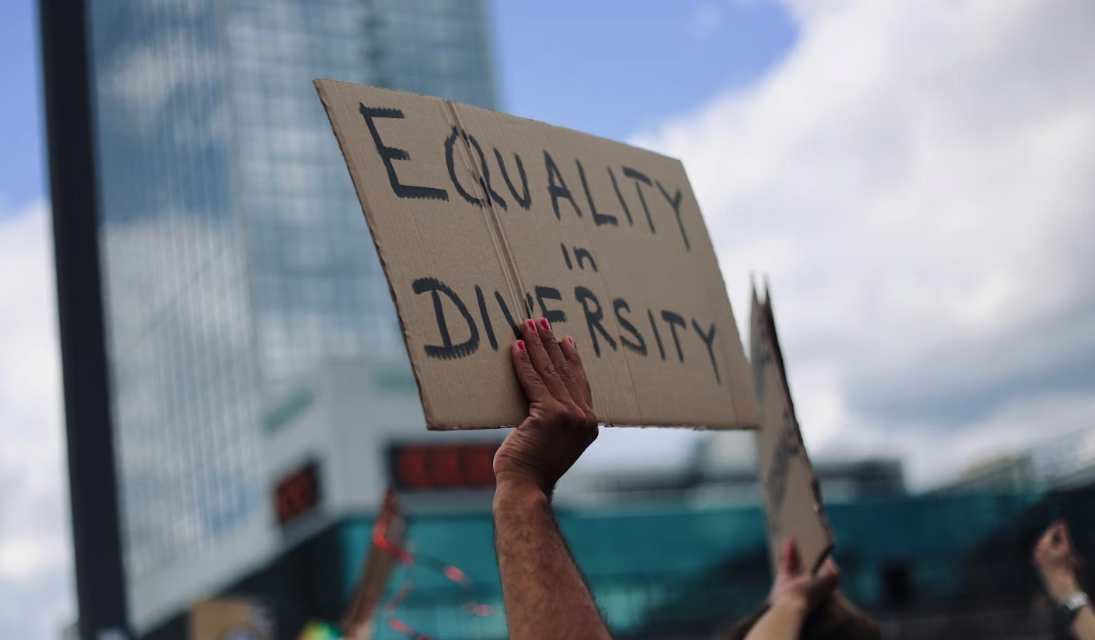
Does being a loving person guide us into a gracious broad-mindedness which always accepts, tolerates and validates others? Should all differences be accepted? Might the wrong path sometimes appear to be the right choice?
If we wish to hear God’s message and not merely an empty echo of our own thoughts, we must resist the temptation to handle Scripture selectively and infuse our own definitions into its words. This is true, regardless of our feelings about tolerance, acceptance and inclusion.
On the one hand, tolerance, acceptance and inclusion are good and godly values. Jesus taught people should not judge others lest they be judged (Matthew 7:1). Those who desire to serve Christ are to accept one another just as Christ has accepted them (Romans 15:7). Furthermore, God’s people are to keep matters of personal conviction private between themselves and God (Romans 14:22). Add to this that through Christ, God is working to unite everything in heaven and on earth (Ephesians 1:10) and it should be clear that tolerance, acceptance and inclusion are godly values.
And yet at other times scripture demands intolerance, rejection and exclusion. God’s people are instructed to judge those within the church in order to exclude unrepentant sinners (1 Corinthians 5:12-13). Christ does not accept everybody; those who disobey will be rejected even though they call him Lord (Matthew 7:21-22). There are false doctrinal perspectives which should be reproved and rejected (Galatians 1:6-9). And finally, God rejects and will pour out His wrath upon the rebellious (Romans 1:18).
So how do these conflicting impulses coexist in the godly life? The keys for harmonizing these seemingly contradictory positions are straightforward. 1) Don’t elevate a good principle into becoming the highest guiding principle. Some values supersede acceptance as well as rejection. 2) Define Biblical words with biblical definitions. Avoid redefining love as always tolerating.
Neither inclusion, acceptance, tolerance nor exclusion, rejection and intolerance were intended to be the measuring stick for determining how to respond in every situation. God would have us welcome all sinners to respond to Christ, and yet we are to be intolerant of rebellious unrepentant sinfulness within the church. In fact, whenever any godly principle fails to honor the higher principle of what it means to love God, that subordinate principle will become twisted into something horribly evil.

- Entrusted - 2026-04-29
- When Good Turns Sour - 2026-04-22
- The Braid of Intentional Parenting - 2026-04-15