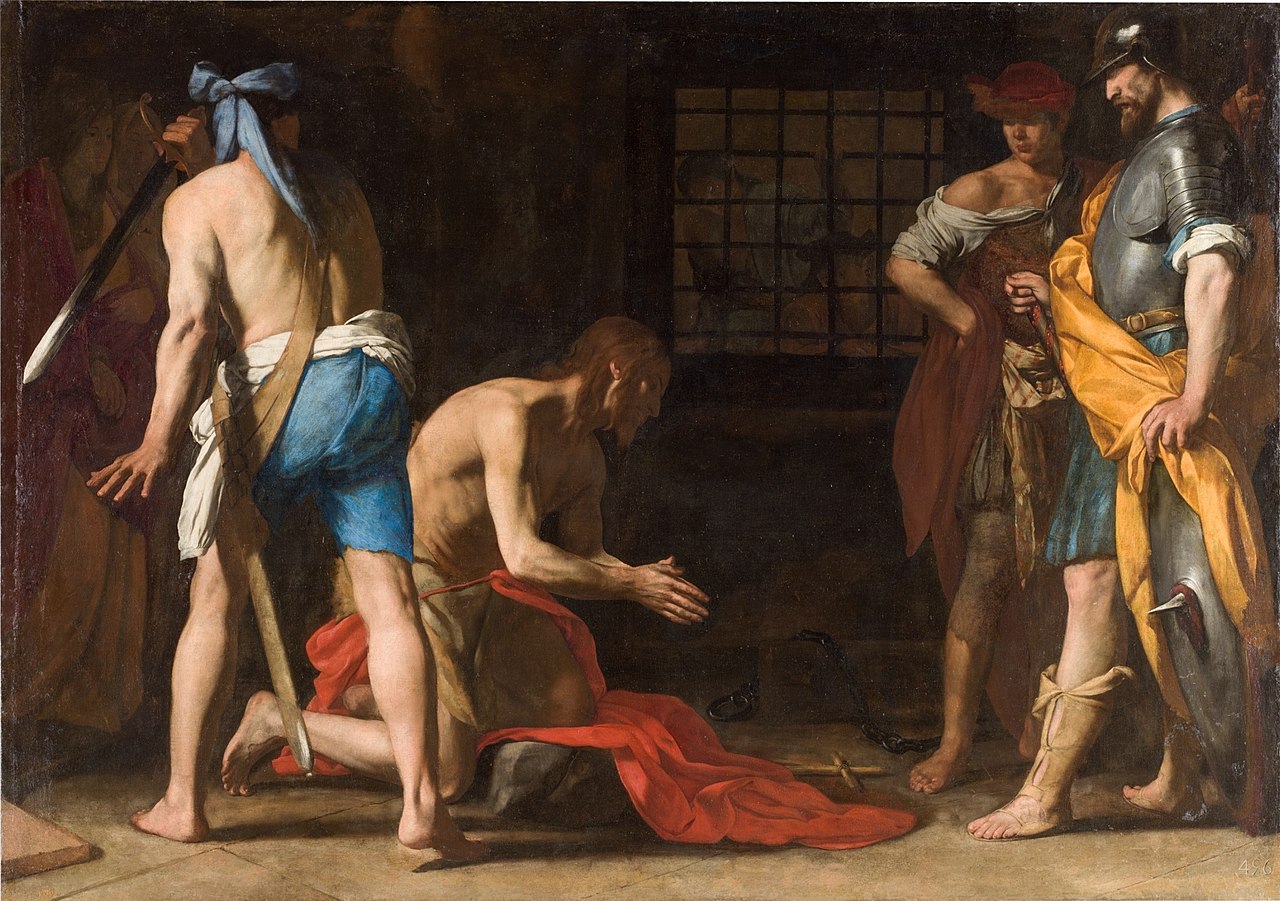
Being a spokesman for God, a prophet, brought great responsibilities. We see this throughout the writings of the Jewish prophets contained in the Old Testament. They had to declare God’s message as they received it and whether or not it was a popular message. The same applied to those who were God’s spokesmen as the New Covenant arrived – and none more so than John. John was called from birth to speak for God.
“And he will go on before the Lord, in the spirit and power of Elijah, to turn the hearts of the parents to their children and the disobedient to the wisdom of the righteous – to make ready a people prepared for the Lord.” (Luke 1:17 NIV)
John had the responsibility to prepare the Jewish people for the arrival of the Messiah, the one they had been looking for since the days of prophets. When he began to speak God’s message people flocked to hear him, with many being immersed to be cleansed from sin. He immersed Jesus, the Messiah, “to fulfil all righteousness” (Matthew 3:15). He then began to point his students to Jesus.
“The next day John was there again with two of his disciples. When he saw Jesus passing by, he said, ‘Look, the Lamb of God!’ When the two disciples heard him say this, they followed Jesus.” (John 1:35-37)
He continued to declare God’s word and immerse people – until he was arrested.
“Now Herod had arrested John and bound him and put him in prison because of Herodias, his brother Philip’s wife, for John had been saying to him: ‘It is not lawful for you to have her.’ Herod wanted to kill John, but he was afraid of the people, because they considered John a prophet.” (Matthew 14:3-5)
John’s message, as a prophet of God, was about the need to turn from sin and follow God. Herod Antipas was a prime example of someone who was desperately in need of change. He had divorced his wife, the daughter of King Aretas IV, so he could marry Herodias, who was already married to his half-brother Philip. Herod, being a ruler of the Jews, did not like his private life criticised. So often those in power think they have absolute power and that they can do anything – after all, they are the one governing.
What would we do if we were in a situation like this? The one governing had left his wife, taken someone else’s wife, and was living in open sin. Would we say anything about this? Would we be willing to criticise how he was living? Would we tell him that he had no right to the one woman he was living with, knowing that, as ruler, he had the power of life and death? John was not willing to compromise his message just because he was talking about a political leader. He told Herod to his face: “it is not lawful for you to have her”. That took courage. That took faith. But he made enemies.
“So Herodias nursed a grudge against John and wanted to kill him. But she was not able to, because Herod feared John and protected him, knowing him to be a righteous and holy man. When Herod heard John, he was greatly puzzled; yet he liked to listen to him.” (Mark 6:19-20)
Herodias was not happy with what John was saying about her relationship with Herod, but Herod wasn’t willing to allow her to have John executed. Herod didn’t know what to do with him but was afraid of him because he recognised that he was a “righteous and holy man”, so he protected him.
Herodias finally orchestrated a scenario where she could have John killed. She had her daughter dance for Herod, who was so captivated that he offered her anything she wanted, up to half his kingdom. Having been coached by her mother, she asked for John’s head.
Would we be willing to continue to speak God’s message even if it wasn’t popular?
Image from Wikipedia.org: “Beheading of St John the Baptist” by Massimo Stanzione (c.1634)
Readings for next week: Matthew 12-17
- Declaring God’s message when it isn’t popular - 2026-03-06
- Is it all a show? - 2026-02-27
- The accuracy of the Bible’s prophecies - 2026-02-20