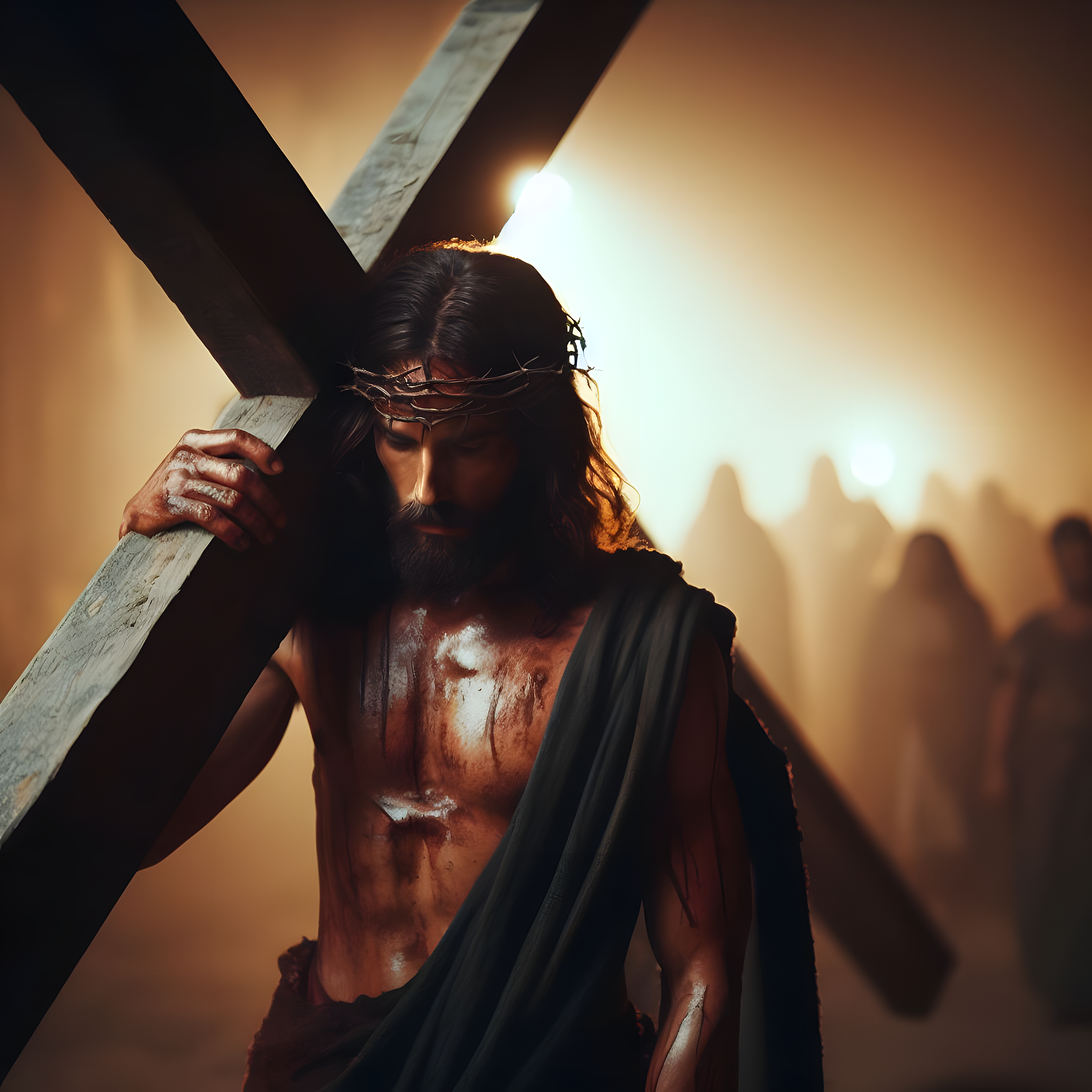
“Every high priest is selected from among the people and is appointed to represent the people in matters related to God, to offer gifts and sacrifices for sins. He is able to deal gently with those who are ignorant and are going astray, since he himself is subject to weakness.” (Hebrews 5:1-2 NIV)
The picture we have of a Jewish high priest in Hebrews may not be the same picture we get when we read the Old Testament Scriptures. The high priest was to serve as a representative for the people of Israel. We usually think of the high priest in terms of the sacrifices that he offered. Even when the people brought a personal sacrifice it was to the tabernacle, and later the temple, and the priests and high priest then were the ones to prepare the sacrifice and offer it on the altar for the people. The high priest very much served as someone who was the people’s representative.
Notice that he also had to have good people skills. When he offered the sacrifices the people brought it would often be due to a sin they had committed. He had to deal gently with such people, realising that he was also human and had the same weaknesses. Even when he offered the yearly sacrifice on the Day of Atonement for the sins of the people, he first had to offer one for his own sins so that he could be in a position to offer one for the sins of the people (Hebrews 5:3).
The contrast being made by the Hebrew writer is of the Jewish high priest with Jesus. Jesus was not a Jewish high priest in Aaron’s line, but “was designated by God to be high priest in the order of Melchizedek” (Hebrews 5:10). But the function was similar. Although Jesus did not have to offer any offerings for his own sins – as he had none – he did offer himself as a sacrifice for our sin. Throughout the New Testament scriptures we read of the gentleness of Jesus with those who sinned, a characteristic of a high priest. Notice how he became a high priest.
“And no-one takes this honour on himself, but he receives it when called by God, just as Aaron was. In the same way, Christ did not take on himself the glory of becoming a high priest. But God said to him, ‘You are my Son; today I have become your Father.’ And he says in another place, ‘You are a priest for ever, in the order of Melchizedek.’” (Hebrews 5:4-6)
Jesus didn’t appoint himself to serve as God’s high priest. God was the one who placed him in this position. This was prophesied in the Psalms (the first quote is from Psalm 2:7 and the second from Psalm 110:4). When God determined that the “seed of woman” (Genesis 3:15) would deal with Satan once and for all, we see he also determined that the Messiah would become an eternal priest in the order of Melchizedek – and all of this long before Melchizedek, or anyone for that matter, was born.
Jesus would be the one who would offer the sacrifice – of himself – to take away the sins of everyone who ever lived. As he was from the line of Judah and the lineage of King David, he could not have served as a Levitical priest. His priesthood would be like that of Melchizedek, the priest of God at the time of Abraham (this is detailed later in Hebrews).
What does this tell us about Jesus? We learn that not only would he make the sacrifice we needed but that he is also approachable as our great high priest. Because he was a human he is able to sympathise with our weaknesses. We can approach “God’s throne of grace with confidence” – confidence that we will receive the mercy and grace that we need (Hebrews 4:14-16).
What a great Saviour Jesus is! His both our sacrifice and our high priest.
Image by CharlVera from pixabay.com. Free for use.
Readings for next week: Matthew 28; Hebrews 1-9
- Jesus our high priest - 2026-03-27
- Are we ready? - 2026-03-20
- God is looking for faithfulness - 2026-03-13