Sometimes we may not be as impressed with the fulfilled prophecies we find in the pages of Scripture as we should be. We read a prophecy in the Old Testament and find its fulfilment in the New. But do we realise all that had to happen for it to be fulfilled? Matthew, we believe, was written for a Jewish audience because of his use of the Jewish Scriptures. When he wrote about the birth and early life of the Messiah he quoted from several prophecies, but lets notice the first of these.
“When he had called together all the people’s chief priests and teachers of the law, he asked them where the Messiah was to be born. ‘In Bethlehem in Judea,’ they replied, ‘for this is what the prophet has written: “But you, Bethlehem, in the land of Judah, are by no means least among the rulers of Judah; for out of you will come a ruler who will shepherd my people Israel.”’” (Matthew 2:4-6 NIV)
When Herod the Great asked where the Messiah was to be born the Jewish leaders quoted a prophecy found in Micah 5:2-4. We know by this time that Jesus had been born in Bethlehem so we realise that this is where the wise men needed to go. But how did his parents happen to be in Bethlehem? They weren’t from this area. They were from northern Israel village of Nazareth. Mary lived there. Joseph was a builder there. They were betrothed, committed to marrying each other. So how did they end up many miles from their home?
It was the Romans who created the reason they needed to be in Bethlehem. It was a census, which the Romans took every fourteen years. We have the actual documents from each census from AD 20 to 270. Luke gives us information about this census.
“In those days Caesar Augustus issued a decree that a census should be taken of the entire Roman world. (This was the first census that took place while Quirinius was governor of Syria.) And everyone went to their own town to register.” (Luke 2:1-3)
Because we have the census information from AD 20 on, and because they happened every fourteen years, we know there would have been one in AD 6, which would have been the second while Quirinius was governor of Syria. The first would have been fourteen years before this, or in 9 BC – yet no one gives this as the year of Jesus’ birth (and he wasn’t born in the year ‘0’ as that date never existed). Most place Jesus’ birth around 6-4 BC due to the reign of Herod. So what happened?
There was a delay for some reason and the census didn’t take place at the correct time but was a few years late – keeping in mind that there were electronic means to report and all these types of administrative functions took far longer than they do today. But it seems that this one was delayed for around four or five years.
Joseph and Mary, being of the tribe of Judah, were required to go to their ancestral home to enrol in this census just at the time that Mary was full-term and needed to deliver her baby. But think about that for a minute – God had to arrange for her to become pregnant by the Holy Spirit (Luke 1:35) at the precise time to coincide with their being in Bethlehem for the delivery which would allow Jesus to fulfil the prophecy of Micah.
At first glance it might seem that all of this was a coincidence, but I would suggest that God didn’t fulfil prophecies by coincidence! God works so that everything happens at the right time and place – and this is seen especially in the birth of the Messiah.
When we read a prophecy and find its fulfilment, take time to think about all that had to happen to make ensure that the prediction was fulfilled.
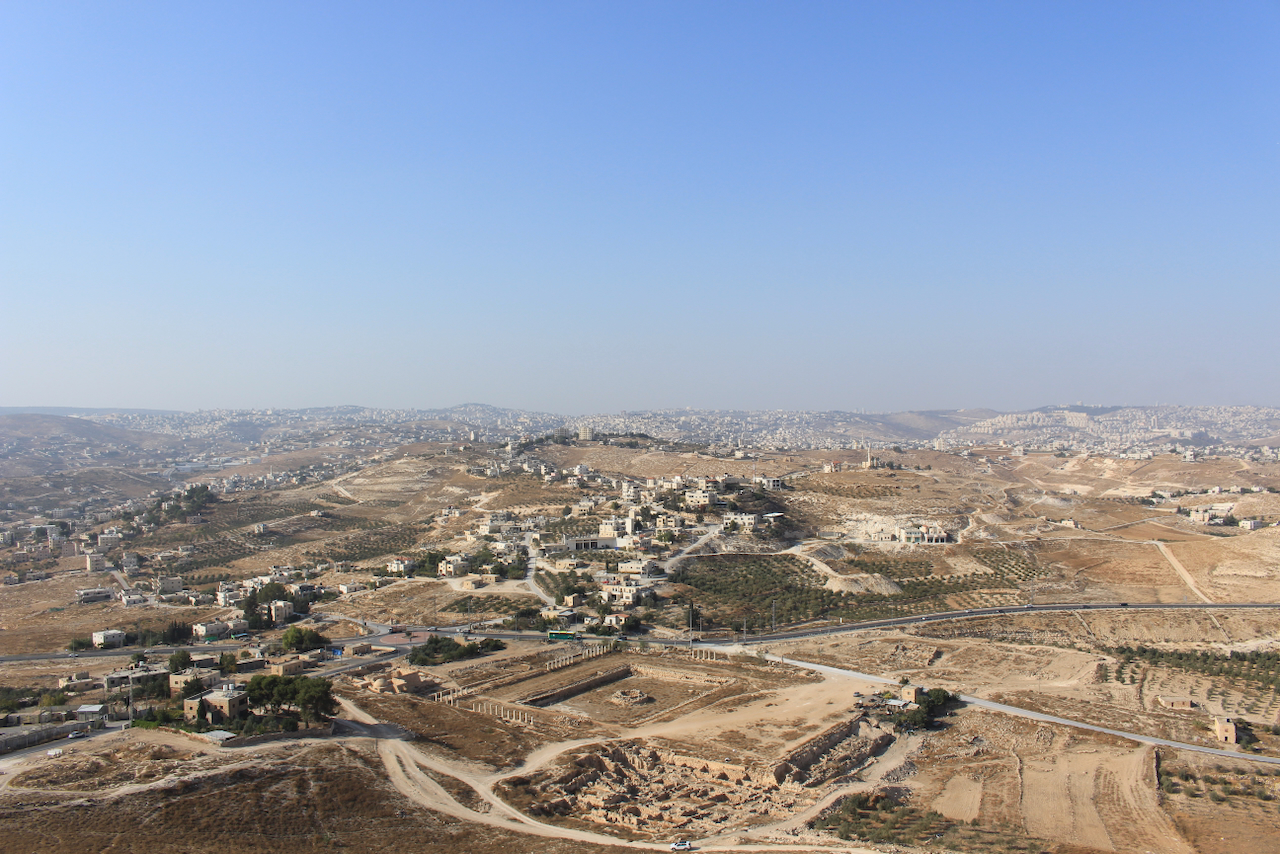
Photo looking towards Bethlehem from Herodium by Jon Galloway.
Readings for next week: Ephesians 5-6; Matthew 1-5
- No one has an advantage - 2026-04-10
- The importance of the resurrection - 2026-04-03
- Jesus our high priest - 2026-03-27