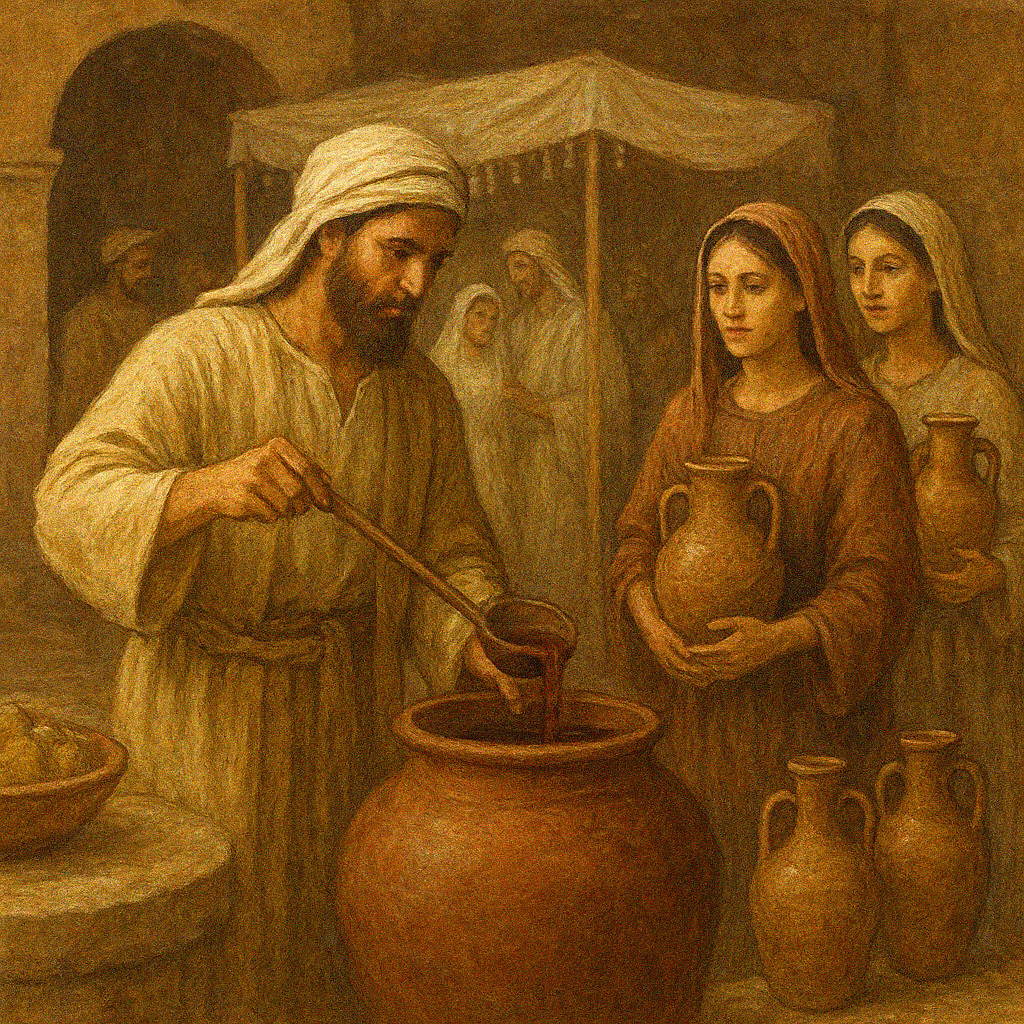
“On the third day there was a wedding in Cana of Galilee. Jesus’ mother was there, and Jesus and his disciples were also invited to the celebration. When the wine ran out, Jesus’ mother said to him, ‘They don’t have any wine.’ Jesus replied, ‘Woman, what does that have to do with me? My time hasn’t come yet.’ His mother told the servants, ‘Do whatever he tells you.’” (John 2:1-5 CEB)
Weddings are a time of rejoicing no matter where you are. Although cultures may celebrate weddings in different ways they are a time of friends and families coming together to celebrate the beginning of a new relationship for a man and his bride. No matter the circumstances, all want the celebration to be without problems and worries.
At this wedding in Cana we discover, though, that there was a problem – they ran out of wine. Keep in mind that wine was not simply used to toast the bride and groom but part of the festivities that could go on for days. Running out of wine would be a huge embarrassment to those who would have been hosting the celebrations.
We might wonder why Mary, Jesus’ mother, thought she needed to come up with a solution and have Jesus intervene. Many suggest that it is likely she was a relative and felt an obligation to do what she could.
We also might wonder what it was that she wanted Jesus to do. Some automatically think she was wanting Jesus to do a miracle, but we need to remember that he had not done any yet (see verse 11). Although there is no definitive answer, I would suggest that she simply called on her oldest son to help out. It would appear that Joseph is no longer present and most likely had died, so Jesus was the one she would rely on.
Jesus, though, seemed to know that something miraculous would be the solution to this problem, as he said, “My time hasn’t come yet”. Generally that phrase is in reference to some aspect of showing that he is the Messiah. Whatever the situation, Mary was confident that Jesus could come up with a solution.
“Nearby were six stone water jars used for the Jewish cleansing ritual, each able to hold about twenty or thirty gallons.Jesus said to the servants, ‘Fill the jars with water,’ and they filled them to the brim. Then he told them, ‘Now draw some from them and take it to the headwaiter,’ and they did. The headwaiter tasted the water that had become wine. He didn’t know where it came from, though the servants who had drawn the water knew. The headwaiter called the groom and said, ‘Everyone serves the good wine first. They bring out the second-rate wine only when the guests are drinking freely. You kept the good wine until now.’ This was the first miraculous sign that Jesus did in Cana of Galilee. He revealed his glory, and his disciples believed in him.” (John 2:6-11)
Can you imagine the surprise the servants had when the headwaiter tasted what they had poured into the jars, which they knew to be water, and declared it to be the best quality wine? Something miraculous had happened to the water they poured into the jars!
Although what Jesus did solved the immediate problem of running out of wine, there was a deeper significance to what he did. John recorded very specific miraculous signs in the good news he wrote about Jesus. The ones he selected were for a purpose: “But these are written that you may believe that Jesus is the Messiah, the Son of God, and that by believing you may have life in his name” (John 20:31 NIV).
The result of this first sign? It revealed Jesus’ glory – it revealed who he was – and the disciples believed.
As we continue to learn what Jesus did and what he taught may our faith be strengthened so that we are also convinced that he is the Messiah, the Son of God.
Image created by Apple’s Image Playground by Jon Galloway.
Readings for next week: John 2-6
- Believing in Jesus the Messiah - 2026-05-08
- Avoid godless, foolish arguments - 2026-05-01
- Proclaiming Jesus fearlessly - 2026-04-17