Christ, the sinless one, suffered for those whose sins condemned them to an eternity in the fires of hell (1 Peter 3:18). Christ’s suffering included dying for us. Jesus is an example of one who suffered for doing what was right. He was a righteous person suffering for those who are not righteous (Ephesians 2:1-6, 13:16). He suffered "once for all" time, which is the more literal meaning of the word translated "once." His only purpose in that death was to bring man back to God. Jesus died physically, but he was "brought to active life in the realm of the spirit" (Woods). The spirit is that eternal part of man in contrast to his fleshly body, which is temporary.
The "spirits in prison" would have to be the disembodied spirits of the disobedient God waited on in the days of Noah. Their prison would be the Hadean realm where they awaited the day of judgment (compare 2 Peter 2:4-5; Jude 6). Just as Christ is said to have preached to the Gentiles through the apostles (Ephesians 2:17), he preached to the people before the flood through Noah (2 Peter 2:5). There is no indication these spirits were in prison when preached to, only that they were in prison when Peter wrote. Since all men will be judged based upon the deeds done in their body, the doctrine of a second chance after death is a false one (1 Peter 3:19; 2 Corinthians 5:10; Matthew 25:31-46).
When those spirits were still in the body, they disobeyed God’s will. Particularly, they were disobedient during the period when God waited for the ark to be prepared, which could have been one hundred years (Genesis 5:32; 7:6). Noah was a preacher of righteousness, so God waited for them to repent. Compared with the multitudes who drowned, eight souls were certainly few. Those eight were saved in the ark by the very water that destroyed the disobedient. The water was the instrument God used to exercise his saving power (1 Peter 3:20).
Noah and his family were taken from a world full of wickedness to a newly cleansed world through water. They were saved from the destruction brought on by man’s sin. They were separated from wicked men. Baptism in water is a figure, or "antitype," of that. Thayer says of the word translated "antitype", "a thing resembling another, its counterpart; something in the Messianic times which answers to the type…prefiguring it in the Old Testament." How appropriate then that baptism should take one from his own sinful state to a new life (1 Peter 3:21; Romans 6:3-4; Acts 22:16). He is thus saved from the destruction his own sin has earned (Romans 6:23; Acts 2:38). He is also separated for God’s service in that watery surrender to God’s will (Romans 6:16-18).
Water was the instrument of God’s saving power for Noah and his family. It is important to recognize that the water of baptism is the instrument of God’s saving power in the Christian age, too. Baptism is not a bath to take away filth from the body. Having given the definitions of "an inquiry" and "a demand" for the word "answer", Thayer says, "As the terms of inquiry and demand often include the idea of desire, the word thus gets the signification of earnest seeking, i.e. a craving, an intense desire."
Thus baptism is our calling out to God with an intense desire for a good conscience. This is accomplished "through the resurrection of Jesus Christ," which would stand for all involved in his sacrificial death, burial and resurrection. Man dies to sin in baptism, is buried and raised to walk in a new life (Colossians 2:12).
Thank God for Noah. He still points us to the means of salvation.
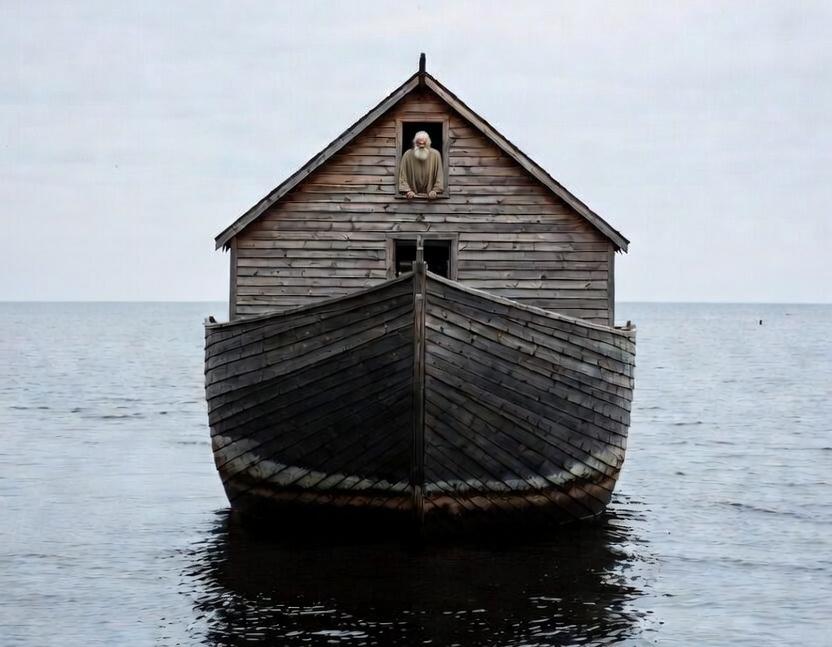
The article’s image is the best AI could do for us. It apparently didn’t consult the Bible before designing the ark.
- Preparing to suffer - 2026-04-16
- Lessons from Noah - 2026-03-26
- God’s watchful care for his children - 2026-03-19