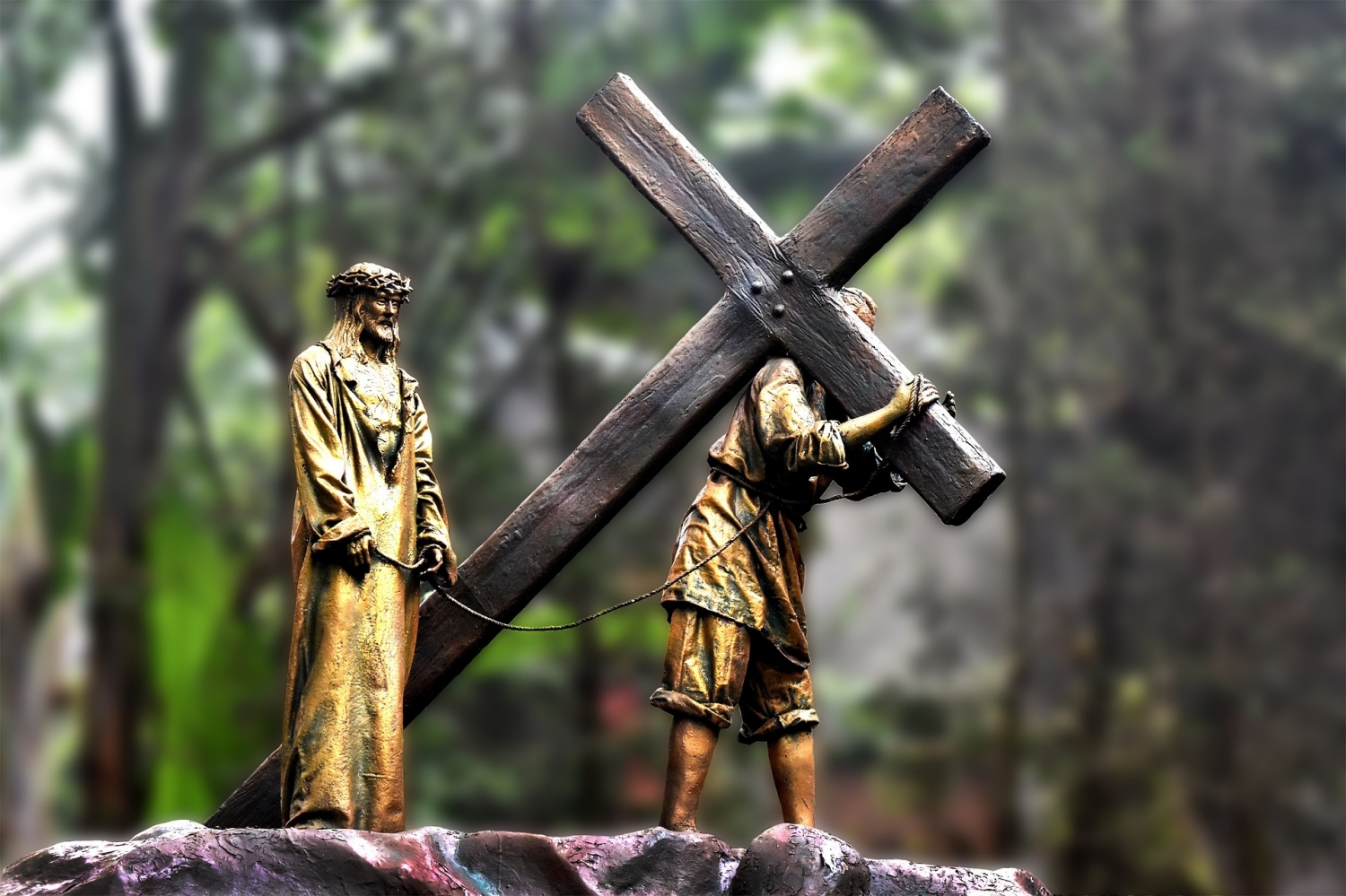
I’m sorry to inform you, but it’s not where you’d think it would be.
It occurs in the gospel of Matthew, the first book of the New Testament, but the first mention of the cross in the New Testament is not about Jesus’ cross ─ Jesus talks about our own cross.
It’s in the context of the limited commission, which, in Matthew’s eyes, has much to say about the Great Commission.
To appreciate it, read, at the very least, the verses in the immediate context.
Whoever loves father or mother more than me is not worthy of me, and whoever loves son or daughter more than me is not worthy of me. And whoever does not take up his cross and follow me is not worthy of me. Whoever finds his life will lose it, and whoever loses his life because of me will find it. Matthew 10.37-39 NETB.
How can Matthew talk about taking up our own crosses before getting to that of Christ?
Most of the readers were probably converts already. And remember that Jesus’ crucifixion comes toward the end of the story.
We’re along for the ride, as we read, and are getting the scoop about our crosses like the first disciples, but we have the advantage of hindsight over them.
So the first mention of the cross here has to do with the nature of following Christ. If he went to his cross, then we must follow him and pick up our own.
If he died for the salvation of the world, we must suffer for the salvation of many.
Don’t want that? Then you don’t want the Christ of the Bible either.
His cross and ours are planted squarely in the middle of the decision of faith.
They are inseparable.
You may sit on padded pews or in comfy chairs. But you can’t maneuver around these crosses.
To be a disciple, talk and doing have to center around his, first, and then ours, immediately after.
To convert others, both his and ours must be front and center.
So the text of Matthew 10.37-39 is actually a fine place to start.
Read it soon with someone who hasn’t yet faced either.

- The quiet power of your Spirit: prayer - 2026-04-18
- It’s dishonest - 2026-04-01
- The first mention of the cross in the New Testament - 2026-03-16